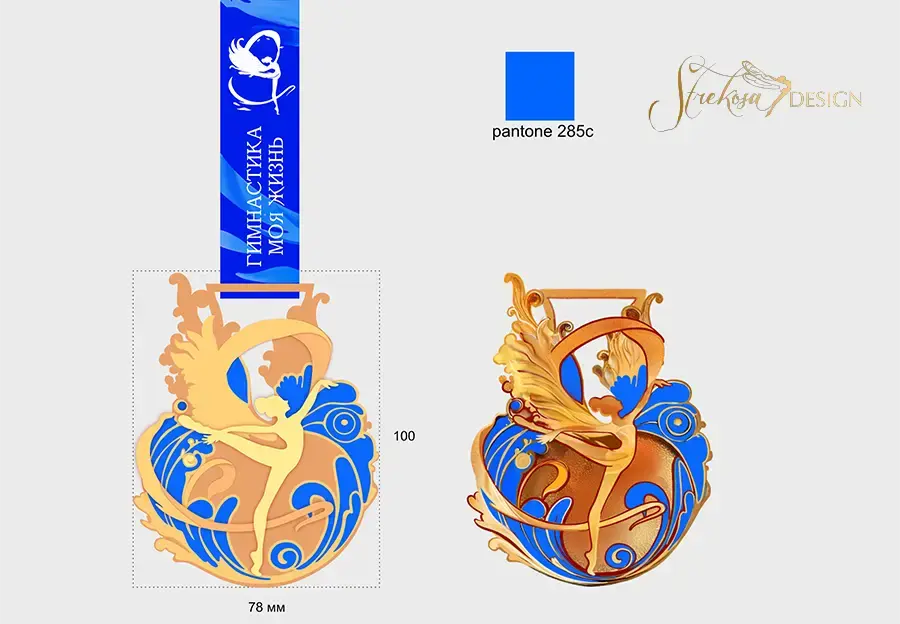
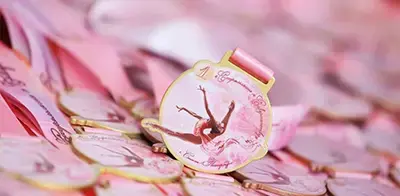
Custom medal design for rhythmic gymnastics competitions.
Unique concepts, visual identity, and production-ready designs for tournaments.
Rhythmic gymnastics medal design is not just decorative work. A well-designed medal reflects the style of the competition, supports the idea of the tournament, elevates the status of the award, and helps the winner feel the value of her achievement.
This is a custom design service for sports competitions, focused on creating medals as part of event identity.
Who This Is For
- rhythmic gymnastics tournament organizers;
- sports clubs and federations;
- international and national competitions;
- event owners building a strong visual identity;
- organizers who want medals to match the level of their event.
What You Get
- custom medal concept based on your competition;
- unique visual design (no templates or stock solutions);
- alignment with your event branding and style;
- production-ready design files;
- scalable design for full medal sets or series.
What Good Rhythmic Gymnastics Medal Design Means
Rhythmic gymnastics medal design is the creation of an award that reflects the spirit of the competition, the visual concept of the tournament, and the emotion of victory. Such a medal should not be just a beautiful keepsake. It should be part of the event identity and serve as a meaningful symbol of achievement.
For me, medal design does not begin with decoration. It begins with an idea. I think about the impression the award should create, the associations it should evoke, and the feeling that should remain with the gymnast after the award ceremony.
Why a Medal Is an Important Part of a Tournament’s Identity
A medal is one of the main symbols of a rhythmic gymnastics competition. It is the object that stays with the participant after the event as a physical reminder of her result, effort, and status.
When a medal is designed thoughtfully, it helps to:
- express the character of the competition;
- support the overall visual concept of the tournament;
- make the award more recognizable;
- increase the emotional value of victory;
- emphasize the level and prestige of the event.
That is why a medal is not a secondary decorative detail. It is an important part of tournament branding.
How I Approach Medal Design
I see medal design as meticulous work in which every detail matters. Shape, composition, decorative elements, rhythm of lines, symbolism, and the overall character of the piece all play an important role.
In my recent projects, I aim to use fresh ideas so that each medal feels individual rather than generic. For me, it is important that the award expresses not only the elegance of rhythmic gymnastics, but also the core idea of a specific competition.
This approach allows me to create medals that do not exist separately from the tournament, but become a continuation of it.
What a Medal Should Communicate to the Winner
A medal should give the winner a sense of deserved distinction. It should emphasize that the gymnast has entered the circle of the best and become part of a winners’ club.
Good award design strengthens this feeling. The medal becomes more than a commemorative object. It becomes a sign of recognition, an achievement, and a symbol of belonging among the strongest athletes.
That is why I design medals for rhythmic gymnastics not as ordinary souvenirs, but as emotionally meaningful objects that preserve the atmosphere of the tournament and the value of victory for many years.
Why Custom Medal Design Matters for Competition Organizers
For competition organizers, custom medal design helps make a tournament more cohesive and memorable. It strengthens the visual image of the event, shapes the impression of quality and professionalism, and increases the perceived value of the award for gymnasts, coaches, and parents.
When a medal is connected to the concept of the tournament, it works more effectively than a standard ready-made solution. It becomes part of the competition story and helps the event stand out among other rhythmic gymnastics tournaments.
Conclusion
Rhythmic gymnastics medal design is a combination of idea, aesthetics, and meaning. A medal should not simply look beautiful. It should feel significant. It should express the spirit of the competition, support the image of the tournament, and strengthen in the winner a sense of success, distinction, and belonging among the best.
You can contact me here to discuss your event.